|
 |
 |
 |
 |
 |
 |
|
|
|
|
|
|
|
|
| BowlerCentral.com Bowler's Education |  |
|
........................... |
Posted on Sat, February 12, 2005 Have you ever taken a look into someone’s, or even your own bowling bag and been amazed at the lack of or the excess amount of “accessories” contained inside? I have seen gadgets, empty containers, old dirty towels, old magazines and flyers and yes even a few times, food. A bowling bag can be a bowler’s “junk drawer” if you will. The right equipment can be the difference, and you can’t take it all with you although some do still try. You can have all of the comforts you need, but it is also a good idea too be ready for anything too go wrong. So here is a good list of things that could have a reason to be in your bag to help with the problems that may come up. The list is for reference only and you should put together your own goodie box of things that you feel you would need. Ball Care Items
Hand Care
Shoe Care
Other Favorites
This list should help you put together your bowling bag for your needs. If your are just bowling league you may only need a small amount of this stuff, but if your a tournament bowler you may need all and more. There are also bowling kits put out by different manufacturers that have some of the above listed items. Are you inspired to create your own accessory kit yet? Maybe it is just the right time to update your current kit. Finding a good way to store all of it can be somewhat of a challenge. Depending on the size of your bag, you might be able to fine a soft-sided pouch similar to a toiletries travel bag to carry most of your accessories. Other suggestions are to use fishing boxes that have adjustable bins. Last but not least while we are on the subject of bowling ball bags. Take the time every 90 days or so and empty that bowling bag completely. Sometimes in a rush, foreign objects find their way into the bag and some are harmful to your equipment. I suggest you clean it out and wipe down the inside of the entire bag. Pay special attention to the ball holding area as sometime a rock or a tool can get lodged in the foam or hard plastic. Evaluate and re-evaluate the needs you have in regards to the bag, the accessories and equipment in order to be better organized. |
|
........................... |
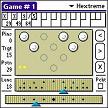
Posted on Thurs, Nov. 11, 2004 This is the second article in our “Making It Count” series and today I am going to discuss a tool that I find is invaluable to me during both practice and league/tournament bowling. There are very few secrets in the game of bowling. Most people know that the difference between a 165 and a 195 average is a matter of covering a few more spares and matching up the strikes more often. When I first started out bowling, I was always given the same advice. “Get the spares to increase your average.” It’s great advice, and it makes sense, but the question on my mind was, “how to do you get better at picking up the spares?” Once I started out on the mission of practicing spares, I came to a big conclusion. What spares should I practice on? I mean, there are an estimated 1,023 different spare. How do you keep them all straight? Now, of these 1,023, only about 65 actually will show up during the course of normal play. It’s easy to remember the common ones, like the dreaded 10 pin or the stiff 5 pin or that pocket 7-10 split. But how often are you leaving certain spares and what is your conversion rate? We watch the PBA on ESPN each week during the season and they have all of these great graphics on conversion rates and it can be mind-boggling how they track all of this data. Well the data has been literally in the Palm of my hand for over 2 years now and I have to say it really helps me be a better bowler. The solution is called Frames. It is a software program running on the popular PDA devices such as Palm and PocketPC. In my opinion, it is the quickest and easiest way to really get into the nuts and bolts of your individual game. At the very affordable price and since the PDA is something one can use for so many other things, it makes this little program a real value. So lets break down what the program does and the end results or data that it provides. Frames can track everything from the date, the bowling center, the type of bowling you are doing, which balls you threw and the format. You also have the option of selecting where you are placing your foot position on the approach, as well as what arrow or mark you are trying to throw. As a traveling bowler, the two key features I use are the listing of which bowling ball I use as well as what type of oil pattern you are bowling on. So why is the ball selection and the oil pattern important? Well after about 120 games entered into frames I learned the following. I won’t post every detail of my tendencies, but here is an example of what Frames can do for a bowler. Regular League Bowling Sport Pattern Synthetic PBA “A” Pattern PBA “B” Pattern Synthetic House Practice 168 average 188 Average 179 average 191 average 200 average Strike % 46.2 Strike % 49.6 Strike % 40.1 Strike % 46.8 Strike % 53.0 So add in the fact that you can track Pocket Percentages, Pocket Strike %, Spare Conversion %, Single Pin % and Split Conversion percentages and you have a good look at what you are doing overall or each game. I like to bowl a game and track it as I go, making the ball changes as I move along and adjusting my mark and foot positions. After bowling is complete, I can then go back and look at my leaves, frame by frame and I can see what ball I chose and what arrow position I was trying to throw ect. Now, my bowling has purpose and a reason. I can see in hard data where I need to most improve right away. The only thing missing is a check box that says, “Hit My Mark”. I can always plan to throw at a spare a certain way, but whether or not I hit the mark is an entirely different matter. The spare detail screen is incredible as it lists all of the spare attempts and conversions you ended up facing that night or overall. Going 4 of 9 on 10 pin conversions is a prime example of what you may discover while you may only remember seeing 5 or 6 during the course of play. By using the Frames Exporter you can get a detailed print out of your effort for review or for your scrapbook. All in all, it’s worth it weight in gold. I really encourage you to take a moment and visit the Frames web site! Click Here. You will see that Walter Ray Williams Jr. uses this system as well. I really encourage everyone to take a look at the PDF file that is the user’s manual. I think it is by far the best explanation of the capabilities and there are so many screen shots available. If you do decide to purchase this program, kindly link to the Frames web site via BowlerCentral.com as we get credit for our referrals and that just helps us continue to grow our web site and defer the costs of hosting our site.
|
|
........................... |
Posted on Turs, Nov. 04, 2004 Over the past few months I have noticed some of the most interesting bowling discussions always have something to do with proper care of the bowling ball. When to resurface? How to increase cover-stock reactivity? What should I do to revive a “dead” ball? And finally, What should I use to clean the ball? I found this information below in a variety of places and would quote the source if I absolutely knew. I can not attest to it’s completeness or that every product is represented, but it is a pretty good start. I was impressed to see a condensed version of it on the wall of one of our very own Pacific Northwest Pro Shops. While everyone has their preference on cleaners and polishers, the ultimate objective is to know what is legal before, during and after competition. Also be sure to check out the new product review on one of the newest ball cleaners on the market. Acceptable/Non-Acceptable Ball Cleaners Solvents and Other Chemicals |
|
........................... |
Posted on Sat, Oct. 23, 2004 In this article I am going to talk about how to get the most out of your practice time. I will cover the different ways to get the most out of the time and money you spend on the lanes. The first thing you need to understand is the only way to get better is to roll that ball. Let's start with the place that you are going to practice. Start by looking at the place you bowl league, they may have special rates for there league bowlers. For those of us that don't have a get deal of money, you may need to look no farther then your home center for the best rates in your area. But some times that may not happen, so the next thing to look for is special event or pricing nights. To bring in bowlers, lots of centers have slow nights where they offer great rates. Also there are some centers that offer a special rate card, buying a lot of games at one time for a lower rate. Also Rock-n-bowl or cosmic night is a good place to get in a lot of games, but it may not be the best place to work on your game. Now lets look at how to start your practice. The first thing if possible, is to have the center turn off the scoring machine and pay only for the frames bowled. This way you will not be looking at your score, this helps with putting your mind into practice mode. Only practice as long as your mind is in it. If your mind is not on what you're doing then you're wasting your money. For most of the people I have worked with, the time they practice is only about 30 to 45 minutes. For this short time they find that they stay focused on what they are trying to do. How to begin your practice is based on what you need to work on. The first thing I would look at is, are you a good spare shooter? If not what is your hardest pin to pick up? Start working on that pin, or pins (ie 7 or 10). If spare shooting is not a problem then hitting your mark maybe, or maybe its a speed problem. The key here is that you need to look at yourself and find out what it is that you need to work on, if you can't see it then ask a friend or team mate to look and see if they can give you a place to start. There are some great ideas for how to practice. Shooting arrows, you start with the first arrow trying to get the ball in the pocket. After about five tries, you move to the second arrow, doing the same thing. You repeat this working your way over the third, fourth, and fifth. This is a good way too find different lines to the pocket. Lowest score (if you have too use the scoring machine), start by shooting at the corner pins. On the first ball try to knock down only one of the corner pins (7 or 10), if the ball goes in the gutter then its counted as a strike. On the second ball try for the other side, if the ball goes in the gutter its a spare. Work on the lowest score possible, you can keep track of your score trying to improve each time you practice. Remember the best game is a 20. |
|
........................... |
Posted on Sat, Oct. 16, 2004 This is an outline on different ways to take care of your bowling balls. It will cover things for the beginner as will as the advanced player. Always remember, if you are not positive about the proper care and maintenance of your bowling balls, your local pro shop can be a great place to find help. They generally have all the information regarding the newest items in cleaner and polish and they will also be able to help you with resurfacing or new ball recommendations. For some reason bowlers think there best place to store their bowling balls is in their car or truck for easy access. In the Great Pacific Northwest, the weather can be a big disadvantage to all bowlers who leave their equipment in their vehicle. In the summer, cars become saunas, and in the winter, a parked car is like a freezer. The temperature can temporarily throw off each ball's surface hardness making the ball slide down the lane or grab early until the ball gets back to room temp. In extreme heat, and in the confines of your bag, a ball can also “sweat” the gathered oils and in some cases lose some of the particles that create reactivity. Most bowlers have a towel in their bag, but there are new micro-fiber towels that can be better help to you. A towel can help remove the oil or conditioner from the ball. The next time you're bowling take the time to look around at the towels people use. They are all different from the size to the type. The biggest thing that I found was that people will spend two hundred dollars on a bowling ball and have a nice towel, but they don't take the time to clean the towel. They try to clean the ball off with a dirty towel and that defeats the purpose of cleaning. The best way to clean off the ball is to use a clean towel. As for the micro-fiber towels, they are designed to remove more or all the oil for the surface of the ball. Keep in mind that a terry cloth or regular towel you use in the home has dense and more widely placed strands of material. The micro-fiber towel is much more dense and has better coverage. You will have to try both and find out what works best for you. There are lots of different cleaners and polishes out on the market today. As for what works best, the answer is in how they are used. Personally, I clean the ball before I start to bowl and also use a towel to keep the oil off the ball during play keeps the ball reacting close too the same. Consistency is the name of the game and this little detail is often forgotten. In regards to cleaners, just make sure that the type of cleaner you choose is recommended for the type of cover-stock on your ball. Polishes are used after you have bowled a number of games and the balls finish has become dull or it can be used on a dull ball too make the ball slide down the lane. This is an area that most people have too try lots of different things too find out what works beat for them. There is something that can be done too a ball that a lot of bowlers don't do or don't do often enough, and that is resurfacing. After about one season of league play most balls have developed a track around the ball, witch will make the ball react faster. So what do you do? Answer, see your local pro shop for a resurfacing. The process is done by lightly sanding the ball, removing the top layer, and returning the ball to a more standard state of reactivity. This can be done by using a device called a ball spinner and wet sandpaper, or by using The Haus Resurfacing System. You should not try to do this without proper training or supervision as you can destroy your ball. There is also a product called Hook Again by Ebonite, that is designed to remove oil that has soaked in to the ball. The old way too do the same thing was to bake the ball, by cooking the ball at a high temp it would swat out the oil. The problem with cooking the ball is that it also removes the reactive resins and plasticizers. The Hook Again system by Ebonite is a great tool that many pro shops have available. More information on Hook Again can be found at www.ebonite.com |
|
........................... |
Posted on Thurs, Sep. 23, 2004 Often, I hear bowlers make the same statement time and time again. “I bowled just fine in practice, and now when I get here to league, I can't seem to score well.” Or “I bowl great during league, but here at the tournament, I can't seem to hit my spots.”. I have to confess, I was this type of bowler, saying the exact same thing. To be completely honest, I was beginning to feel that I did not have the “head game” to be a good bowler. After all, I had successes in other sports, sinking the putt, or free throws in a noisy gymnasium, ect. I will never forget the night I was given this simple bit of advice that has been improving my practice and my weekly results. I was struggling in my weekly Tuesday night league as usual. I practiced at least 2 times a week and easily would post 190+ averages. I get to league and I was lucky to carry a 160 average. That is about a 30 pin swing and quite the handicap. To make things worse, I bowled in a competitive tournament association on the weekend and was having good success, yet my league scores were embarrassing. So here I was, 168 in the first game and a 155 in the second and coming into the 10 th frame with a bevy of opens behind me. My team needed pins and I was determined to get them. I had just finished the 9 th and we were a bit behind so the 10 th frame was open and it was my turn on the opposite lane. I grabbed my ball and tracked one right into the pocket for a strike. Great news, so I throw again. Best ball I have thrown all night. Rolled the third ball down and there it was, a triple to finish. This older gentleman who had been watching a buddy all night nodded at me and said good frame. I sa id something to the effect that I had wished it happened sooner. He said, “You are out of rhythm and that makes you a 10 th frame bowler”. I replied, “Yeah, I am lucky in the 10 th .” What he said next, I will paraphrase to save you the agony of a novel, but what it boiled down to was that I was not making my practice resemble league conditions. I was used to bowling rather quickly and finding a rhythm and my muscles were remembering the strokes before and I was adjusting correctly. In a league situation such as mine was, it was 2-4 minutes between throws (5-man teams) so I was out of sync. He suggested that I work on slowing my practice way down. This made sense to me and it was like a light bulb going off in my head. I was doing well in practice and in tournaments because of the pace. So I grabbed a stopwatch and started waiting a minimum of 2 minutes between frames during practice. I trained myself to make certain that things were in the proper alignment before turning that ball loose down the lane. I saw improvements within a few weeks and now my practice and my league bowling are closer in accuracy. So the next time you practice, think about how close your practice time is to the situation you are working for better results. In the next issue, I will begin to introduce to you, tools that can help you make your practice even more productive and help you gain perspective on the consistency of your individual stroke. Note Every bowler has his or her own unique approach to the fundamentals of bowling. What works for one person, may not always work for the next. BowlerCentral.com only offers these articles as suggestions rather than guidelines. |
|

|